Engineering First
Fiber cement starts with a formula, not a price point. Its triple-component engineering gives it properties that single-material siding cannot match, regardless of how well it is installed.
Each fiber cement panel begins with Portland cement as its structural foundation. Fine silica sand is added for density and surface stability, and cellulose fiber reinforcement distributes stress across the panel so it flexes slightly without fracturing. This engineered composition is why fiber cement panels maintain their shape and finish over decades where wood warps and vinyl creeps.
A Class A fire rating under ASTM E84 standards requires that a material show minimal flame spread and smoke development during a sustained heat exposure test. Fiber cement passes this test by default because its primary ingredient, Portland cement, is incombustible by nature. When your home's exterior carries this rating, the risk of a fire spreading across the cladding drops significantly compared to vinyl or untreated wood alternatives.
Vinyl siding has a thermal expansion coefficient roughly four times higher than fiber cement. That means vinyl panels can grow and shrink noticeably between a cold winter morning and a hot summer afternoon, eventually causing panels to buckle, gap, or pop off. Fiber cement does not have this problem. Its dense mineral composition absorbs temperature change with very little dimensional movement, keeping panels tight, straight, and properly seated regardless of season. In Lebanon, IN, where temperature variation can be dramatic, this stability translates directly into a cleaner appearance and fewer maintenance calls over time.
The Numbers Tell the Story
Sticker price is only one piece of the siding equation. When you look at lifespan, maintenance cost, fire rating, and durability, fiber cement's total cost of ownership is competitive with or lower than materials that appear less expensive upfront.
| Category | Fiber Cement | Vinyl | Wood | Aluminum |
|---|---|---|---|---|
| Typical Lifespan | 30-50 Years | 15-25 Years | 10-20 Years | 25-35 Years |
| Fire Rating | Class A | Not Rated / Melts | Combustible | Not Rated |
| Rot / Pest Resistance | Fully Resistant | Resistant | Vulnerable | Resistant |
| Maintenance Required | Low — Repaint Every 10-15 Yrs | Very Low | Very High — Frequent Repainting | Moderate |
| Paint Durability | Excellent — Holds Paint 10-15 Yrs | Limited Options | Moderate at Best | Moderate |
| Impact Resistance | High | Moderate | Dents and Splits | Moderate — Dents Easily |
What Sets Our Installs Apart
Certification matters when it comes to fiber cement. Our installers have completed factory training and know the nailing patterns, joint treatments, and flashing requirements that keep warranties intact.
Lebanon, IN's temperature range and humidity levels directly affect how fiber cement should be installed and finished. We size joints, select caulks, and specify paint systems with local conditions in mind.
Precise cutting defines the finished quality of any fiber cement installation. We apply the same accuracy at trim boards, window headers, and corner returns as we do on field panels, because gaps in these areas are the first places water finds a way in.
A warranty is only valuable when it is honored. We install fiber cement to factory specifications, use approved fasteners, maintain required clearances, and document the project so that any warranty claim you ever need to make is fully supported.
The Full Range
Whether your project calls for a complete reclad or a specific panel style, Fiber Cement Siding brings the same attention to detail and certified installation process to every fiber cement job.
Complete fiber cement siding installation for new construction and re-siding projects. Our crew manages material handling, substrate prep, and precise panel application from the first course to the ridge.
Board-and-batten styling in fiber cement gives your home a premium architectural profile. We handle all field cuts and joint treatments to ensure the vertical lines stay true from foundation to fascia.
Isolated fiber cement panel damage is contained quickly when handled by an experienced crew. We source matching profiles, handle field cuts, and integrate replacements with the existing installation so the repair is invisible from the street.
Factory-primed fiber cement is one of the best paint substrates available for exterior use. We ensure all panel edges receive field primer before installation, all penetrations are caulked with paintable sealant, and the finished surface is fully prepared for your chosen topcoat color.
Shingle-profile fiber cement brings classic character to any home exterior without wood's vulnerability to moisture and insects. Our installation approach pays particular attention to coursing consistency and edge alignment so the shadow line reads evenly across every wall face.
How It Works
We follow a consistent installation process on every fiber cement project in Lebanon to protect your home, your warranty, and your investment from day one.
We assess your home's current exterior, discuss profile options and paint strategies, and provide a detailed written estimate that specifies the exact product, thickness, and finish method we propose to use.
We remove existing siding, inspect sheathing for rot or moisture damage, install new housewrap or repair existing moisture barrier, and address any fastener or structural issues before the first fiber cement panel is touched.
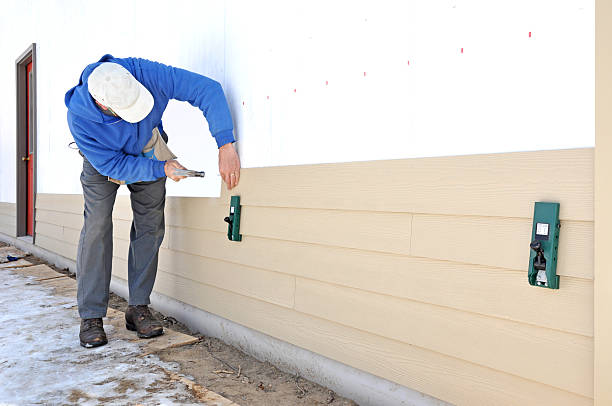
Our crew installs panels following manufacturer specifications for fastener type, nailing pattern, and joint treatment. We field-prime all cut edges, set expansion gaps to published tolerances, and ensure corner boards, trim, and J-channels are correctly integrated before panel installation proceeds.
Before calling a job complete, we walk every inch of the installation: checking for unsealed joints, exposed cut edges, loose trim, and any areas where the moisture barrier needs attention. We hand you a completion document that includes the product code, installation date, and our contact information for warranty support.
Fiber cement siding is an engineered composite material made from Portland cement, sand aggregate, and cellulose fiber reinforcement. It is manufactured under heat and pressure, producing panels that are denser, harder, and dimensionally more stable than any wood or vinyl product currently available for residential exterior use. The manufacturing process eliminates the cellular structure that allows wood to absorb water and expand, which is one of the primary reasons fiber cement resists rot, insect damage, and moisture infiltration far more effectively than traditional wood siding products over a full service life.
In Lebanon, IN, where seasonal conditions can drive significant swings in temperature and humidity, fiber cement's dimensional stability is one of its most practically important advantages. Vinyl siding expands and contracts with temperature at a rate that is roughly four times higher than fiber cement. In practice, this means vinyl panels can develop visible gaps in cold weather and visible bowing in summer heat, particularly on south-facing and west-facing wall exposures where direct sun drives surface temperatures well above ambient air temperature. Fiber cement panels, by contrast, move very little across a full seasonal cycle. The gaps set at installation remain consistent, the panels stay flat, and the fasteners stay firmly seated rather than being cycled loose over years of thermal movement.
The Class A fire resistance rating that fiber cement carries is worth understanding beyond the label. Under ASTM E84 testing, the standard fire test for building materials, a Class A rating means a material resists sustained flame spread and produces minimal smoke during fire exposure. Fiber cement earns this rating not through a chemical fire-retardant additive but through the inherent incombustibility of its primary ingredient, Portland cement. The cement matrix simply does not burn. Only the cellulose fiber content is combustible, and it is present in low enough concentration that the panel as a whole does not sustain a flame. For homes in Lebanon, IN that face either wildfire exposure risk or strict local fire code requirements, a Class A exterior cladding can be a significant practical and insurance consideration.
The painting requirements for fiber cement are also more specific than some homeowners expect. Factory-primed fiber cement requires all field-cut edges to be primed with an approved primer before the panel is installed, not after. All joints and penetrations must be caulked with a paintable, paintable elastomeric sealant rated for exterior use. The topcoat itself must be a quality 100-percent acrylic exterior latex. Applied correctly, this paint system bonds to fiber cement exceptionally well and can last ten to fifteen years before recoating is needed. Applied incorrectly, paint on fiber cement will peel within a few years regardless of how good the underlying panel is. Choosing an installer who understands and follows these paint requirements is as important as choosing the right siding product.
Finding a qualified fiber cement installer in IN requires asking the right questions. Ask specifically whether the installer carries a current certification from the fiber cement manufacturer whose product they are proposing to use. Ask whether they field-prime all cut edges before installation. Ask what fastener schedule they use and whether they follow the manufacturer's published installation guide. Ask what caulk product they use for joints and whether it is rated paintable and exterior-grade. Ask whether they will provide written documentation of the installation, including product codes and installation dates, at job completion. These questions quickly separate experienced fiber cement specialists from general siding contractors who are unfamiliar with the specific requirements of this material. Fiber Cement Siding answers all of these questions affirmatively and documents our installations as a standard part of every project we complete in Lebanon, Lebanon, IN and the surrounding area.
What Homeowners Say
“Fiber Cement Siding was the only contractor who could answer every question I asked about fiber cement installation requirements. The other crews I talked to were guessing. Fiber Cement Siding knew exactly what primer to use, what caulk was appropriate for the joints, and what the manufacturer required for the warranty to stay valid. That level of knowledge made the choice easy.”
Lebanon, IN Resident
“I hired Fiber Cement Siding to re-side my home with fiber cement shingles after a competitor gave me a bid that did not include edge priming. Fiber Cement Siding caught that gap immediately when I mentioned it and explained exactly why that shortcut matters for long-term performance. The installation they delivered was as thorough as their explanation.”
Fiber Cement Client, IN
“Fiber Cement Siding replaced rotted wood siding on our older home with fiber cement and the transformation was remarkable. They found and repaired sheathing damage we did not know we had before the first panel went up. The project came in on budget and on schedule and the result looks like a completely different house in the best possible way.”
IN Homeowner
FAQ
For most homeowners in Lebanon, IN, fiber cement's higher upfront cost is offset by a longer service life and significantly lower maintenance requirements over a thirty to fifty year ownership period. Vinyl typically lasts fifteen to twenty-five years before replacement is needed and may require panel replacement from impact damage in the meantime. Fiber cement in good condition with periodic repainting can serve a home for four to five decades. When you factor in the cost of one or two vinyl replacement cycles, plus the maintenance avoidance fiber cement provides, the total cost picture often favors fiber cement over any ownership period exceeding about fifteen years.
Fiber cement comes in two forms: factory-primed and ready-to-paint, or pre-finished with a factory paint coat already applied. Factory-primed fiber cement needs to be painted after installation, typically within the manufacturer's specified window, using a quality exterior acrylic latex product. Pre-finished fiber cement comes with a paint coat that is baked on under controlled factory conditions and may last fifteen years or more before a refresh coat is needed. Either way, the maintenance interval for fiber cement paint is substantially longer than for wood siding, which is one of the practical advantages that makes fiber cement's maintenance cost significantly lower over a full ownership period.
Fiber cement siding installed correctly and maintained with periodic repainting can realistically serve a home for thirty to fifty years. Manufacturer warranties on major fiber cement products run thirty years or more, which is the most direct statement of expected service life from the companies that make and guarantee these products. Real-world installations in varied climates have demonstrated performance well within this range when installed with correct moisture barrier integration, proper fastening, and a maintained paint schedule. The material itself does not rot, does not support insect infestation, and does not degrade from UV exposure the way wood or vinyl do, which means the main maintenance variable over its life is repainting rather than material replacement.
A Class A fire rating under ASTM standards means a material demonstrates very low flame spread and minimal smoke production during sustained fire exposure. For fiber cement, this rating is permanent because it derives from the mineral composition of the material rather than from a surface treatment. Portland cement cannot be made to burn under any conditions a residential fire would produce. Vinyl siding, by comparison, can soften and drip flaming material at temperatures well within the range of a typical residential fire. Whether fire resistance matters specifically for your home in Lebanon, IN depends on local fire exposure risk and applicable building codes, but it is a meaningful advantage in any risk scenario.
Installing fiber cement over existing siding is technically possible in some circumstances but is generally not recommended, and at Fiber Cement Siding we virtually always advise full removal of existing material before fiber cement installation. The reason is straightforward: fiber cement is heavy, and adding that weight to a substrate you cannot inspect creates risk. When we remove existing siding, we can see the sheathing, check for moisture damage, inspect the housewrap or building paper, and address any substrate problems before they are sealed behind new panels for the next thirty years. Homeowners who skip this step sometimes discover, years later, that water had been infiltrating behind the old siding and the damage behind their new fiber cement panels was significant and invisible until it became serious.
Looking for a certified fiber cement installer in IN is worth the extra research step. Ask any contractor you are considering whether they carry a current certification from the specific manufacturer whose product they are proposing. Ask to see it. Ask whether they field-prime all cut edges before panel installation. Ask what fastener schedule they use and whether they document it. These questions should be answered immediately and specifically by any genuinely experienced fiber cement installer. Fiber Cement Siding carries current certifications and documents every installation as a standard practice because we believe homeowners deserve the warranty protection and performance assurance that certified installation provides.
Ready to Get Started?
Fiber Cement Siding brings certified fiber cement installation to Lebanon, Lebanon, IN. Call today and a project specialist will schedule a free on-site assessment and written estimate for your home.
Get Your Free Quote: +1-844-782-0929